
Oral Pathology in Rancho Bernardo, CA
Now Accepting New Patients
Consultations and surgical procedures are currently performed at our modern surgical location in San Marcos while our Rancho Bernardo office is under construction. Opening Spring 2027.
Protect Your Health with Early Oral Pathology Diagnosis
Changes inside your mouth should never be ignored. We evaluate:
- Persistent mouth sores
- White or red patches
- Lumps or growths
- Tongue abnormalities
- Lip lesions
- Jaw abnormalities
At RB Oral & Facial Surgery, our board-certified oral and maxillofacial surgeons provide complete oral pathology care. They offer evaluations, biopsies, and surgical treatment. We treat abnormalities of the mouth, jaw, lips, tongue, and nearby tissues.
Schedule An Evaluation If You Notice:
✔ A sore lasting longer than two weeks
✔ A lump inside your mouth
✔ Difficulty swallowing
✔ A white or red patch
✔ Persistent numbness
✔ Changes in your tongue
Our team combines advanced diagnostic technology with extensive surgical expertise to accurately identify oral diseases and develop personalized treatment plans. Whether your dentist referred you or you noticed a lasting sore, lump, or discoloration, we are here to help. We will provide clear answers and compassionate care.
We proudly serve patients from Rancho Bernardo, Poway, Escondido, Del Mar, Encinitas, and throughout North County San Diego.
Who We Are
Why Patients Love Us
- Comprehensive Surgical Expertise
- Patient-Centered Care
- Advanced Techniques & Technology
- Trusted Surgical Team
Contact Us
Phone: (858) 253-1253
Email: info@rboralsurgery.com
Location (Opening Soon):
117 Bernardo Plaza Ct #205,
San Diego, CA 92128


Meet the Surgeons

Dr. David Rasmussen
Dr. David Rasmussen is a board-certified oral and maxillofacial surgeon with advanced training in both dentistry and medicine. He is dedicated to delivering exceptional patient care and is an active member of leading medical and dental organizations.

Dr. Travis Scholer
Dr. Travis Scholer is a board-certified oral and maxillofacial surgeon with advanced training in oral surgery and anesthesia. He completed his specialty residency in Oral and Maxillofacial Surgery at the University of Arizona College of Medicine–Phoenix.

Dr. Eric Bischoff
Dr. Eric Bischoff is a board-certified oral and maxillofacial surgeon with extensive military and academic leadership experience. He is committed to delivering exceptional surgical care and advancing the specialty through education, research, and professional leadership.
What is Oral Pathology?
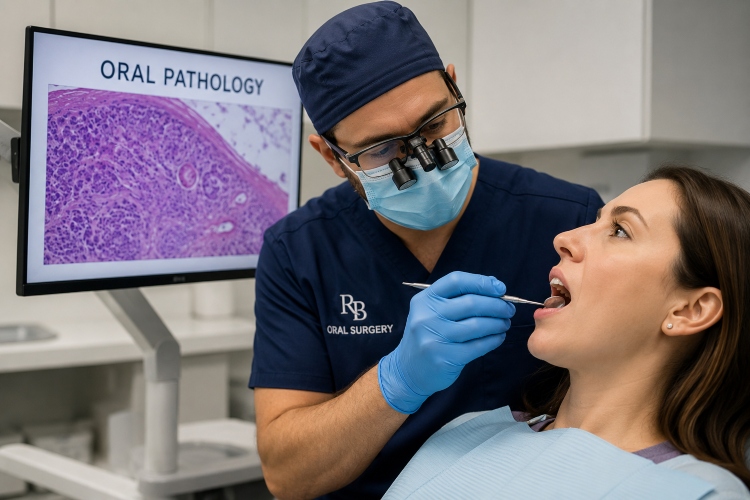
Oral pathology is the diagnosis and treatment of diseases that affect the soft tissues, bones, and glands of the mouth and jaw. An oral pathology evaluation helps determine whether an abnormal area is benign, inflammatory, infectious, precancerous, or cancerous.
Many oral conditions look similar, making a professional examination essential. Early diagnosis often leads to simpler treatment and better outcomes, particularly when oral cancer is detected in its earliest stages.
What Signs Should Never Be Ignored?
You should schedule an evaluation if you notice any changes in your mouth that persist for more than two weeks.
Common symptoms include:
- A sore that doesn’t heal
- White or red patches
- A lump or thickened tissue
- Persistent mouth pain
- Swelling of the gums or jaw
- Difficulty swallowing
- Chronic hoarseness
- Numbness in the lips or tongue
- Loose teeth without an obvious cause
- Unexplained bleeding
- Jaw swelling or facial asymmetry
Even if these symptoms are painless, they should be examined by an oral and maxillofacial surgeon.
Conditions We Diagnose and Treat
Our surgeons evaluate a wide variety of oral and maxillofacial conditions, including:
Oral Cancer
Early identification of oral cancer can significantly improve treatment success. Suspicious lesions may require a biopsy for a definitive diagnosis.
Benign Oral Lesions
Many growths inside the mouth are not cancer. They may still need removal if they affect eating, speaking, or oral health.
Oral Cysts
Cysts can develop within the jawbone or soft tissues and often grow without causing pain until they become larger.
Jaw Tumors
Some jaw tumors are benign, while others require more extensive treatment. Early diagnosis helps preserve surrounding bone and teeth whenever possible.
Salivary Gland Disorders
Blocked or diseased salivary glands may cause swelling, pain, or difficulty eating and may require surgical treatment.
Bone Lesions
Abnormalities within the jawbone are often discovered during routine dental x-rays and may require further evaluation or biopsy.
What Happens During an Oral Pathology Consultation?
Your appointment begins with a comprehensive examination of your mouth, jaw, neck, and surrounding tissues.
Your surgeon may:
- Review your medical and dental history
- Discuss your symptoms
- Examine the affected area
- Review previous dental X-rays
- Obtain advanced 3D CBCT imaging when appropriate
- Recommend monitoring or a biopsy
Every treatment recommendation is based on your individual findings.
What is an Oral Biopsy?
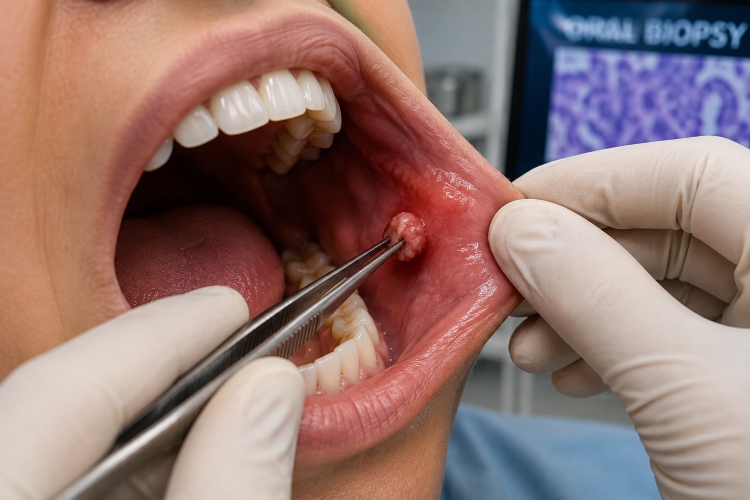
A biopsy is a simple procedure used to remove a small sample of tissue for laboratory evaluation. It is often the most reliable way to determine the cause of an abnormal lesion.
Depending on the size and location, your biopsy may involve:
- Incisional biopsy (sampling a portion of the lesion)
- Excisional biopsy (removing the entire lesion)
- Needle biopsy for certain masses
Most biopsies can be done using local anethesia. Sedation is available for anxious patients or for more complex procedures.
What Happens After a Biopsy?
First
The tissue sample is sent to a specialized pathology labratory.
Second
A pathologist examines the cells under a microscope.
Third
Your surgeon reviews the results with you.
Finally
A personalized treatment plan is created if additional care is needed.
Many biopsy results reveal benign conditions that require little or no additional treatment. If further care is necessary, our surgeons will explain every step and coordinate your treatment.
Why Early Diagnosis Matters
Many serious oral diseases begin with subtle symptoms.
Early diagnosis can:
- Improve treatment outcomes
- Preserve healthy tissue
- Reduce the need for extensive surgery
- Detect oral cancer before it spreads
- Provide peace of mind when lesions are benign
Waiting to see if an abnormal area resolves on its own may allow certain conditions to worsen.
Advanced Surgical Care You Can Trust
Our practice offers:
- Board-certified oral surgeons
- Advanced 3D CBCT imaging
- Precision surgical planning
- Comprehensive sedation options
- Personalized treatment plans
- Collaborative care for complex cases
Your comfort, safety, and long-term health remain our highest priorities.
Schedule an Oral Pathology Consultation
If you’ve noticed an unusual change in your mouth, don’t wait for it to worsen. Early evaluation can provide peace of mind and, when necessary, lead to earlier treatment.
Our experienced oral surgeons proudly serve patients from Rancho Bernardo, Poway, Escondido, Encinitas, Del Mar, and throughout North County San Diego with comprehensive oral pathology diagnosis and surgical care.
Contact RB Oral & Facial Surgery today to request your consultation and receive expert evaluation from our board-certified surgical team.
Related Oral Surgeries
Dental
Implants
Grafting
Frequently Asked Question
Can my dentist diagnose oral abnormalities?
Dentists often find abnormal areas during routine exams, but patients are often sent to an oral and maxillofacial surgeon. The surgeon provides further evaluation, biopsy, and treatment.
How long does it take to receive biopsy results?
Most pathology reports are available within several days to about one week, depending on the laboratory and complexity of the case.
Does an oral biopsy hurt?
Most patients experience very little discomfort. Local anesthesia keeps the procedure comfortable, and mild soreness afterward is usually managed with over-the-counter medication.
Is every mouth sore cancer?
No. Most oral sores are not cancerous. However, any sore that remains for more than two weeks should be professionally evaluated.
What causes oral lesions?
Oral lesions may result from irritation, infection, trauma, autoimmune diseases, tobacco use, viral infections, or abnormal cell growth. An evaluation is needed to determine the exact cause.